
Fast charging is one of those iPhone features that’s incredibly convenient until you start thinking about battery health. Plug your iPhone into a 20W charger, and the battery percentage climbs much faster than it did with older 5W chargers. But that speed leads to a clear question: is fast charging bad for iPhone battery?
The short answer is that Apple’s supported fast charging isn’t something most iPhone users need to avoid. Fast charging can place additional stress on lithium-ion batteries, particularly when higher charging currents create excessive heat. But charging speed is only part of the battery-aging story.
Temperature, charging habits, cycle count, time spent at a high state of charge, and the phone’s own charging management all matter.
I wanted to see what happens during fast charging in real use, so I tested an iPhone 15 with a 20W charger, tracking charging time and surface temperature from 20% to 80%. The same iPhone has been fast-charged since new and now reports 89% maximum capacity after about 10 months and 470 cycles.
Here’s what I found.
Contents
The Short Answer
Is fast charging bad for iPhone battery health? Not necessarily.
There is a reason people ask: does fast charging damage iPhone battery over time? Lithium-ion research shows that higher charging currents can increase battery stress, particularly when they generate additional heat. Higher temperatures can accelerate chemical reactions that contribute to battery aging.
But an iPhone doesn’t simply send maximum charging power into its battery continuously. The phone controls the charging process, adjusts charging current as conditions change, and slows charging as the battery fills. Apple also uses temperature management and charging optimization features to reduce battery aging.
In the iPhone 15 test, the phone charged from 20% to 80% in 36 minutes using a 20W charger. Its measured back-surface temperature peaked at 38°C, despite the room already being at a warm 35°C.
More importantly, charging became progressively slower as the battery filled. That behavior matters when discussing whether a fast charger damages iPhone battery health.
iPhone 15 20W Fast-Charging Test
The charging test was kept as controlled as reasonably possible without turning it into a laboratory experiment. The iPhone 15 started at 20% battery, and the main test ended at 80%.
- Case removed
- Airplane Mode enabled
- Wi-Fi and Bluetooth turned off
- Screen kept off except when checking readings
- No active phone use during charging
- External timer used for timing
- Same 20W charging setup used throughout
- Room temperature maintained at approximately 35°C
- Temperature was measured from the back at the same spot using an infrared thermometer.
That’s worth emphasizing because this was a warm test environment. Apple identifies 16°C to 22°C as an ideal ambient temperature range and recommends avoiding using or charging an iPhone in ambient temperatures above 35°C, which can permanently reduce battery lifespan.
Apple specifically warns that exposure to ambient temperatures above 35°C can permanently reduce battery capacity. So this wasn’t a cool 20°C laboratory-style charging test. It was performed right at the upper end of Apple’s stated operating range.
Fast-Charging Test Results
Here are the results.
| Battery level | Time for previous 10% | Cumulative time | Back-surface temperature |
|---|---|---|---|
| 30% | 4 minutes | 4 minutes | 37°C |
| 40% | 5 minutes | 9 minutes | 38°C |
| 50% | 5 minutes | 14 minutes | 38°C |
| 60% | 6 minutes | 20 minutes | 37°C |
| 70% | 7 minutes | 27 minutes | 37°C |
| 80% | 9 minutes | 36 minutes | 37°C |

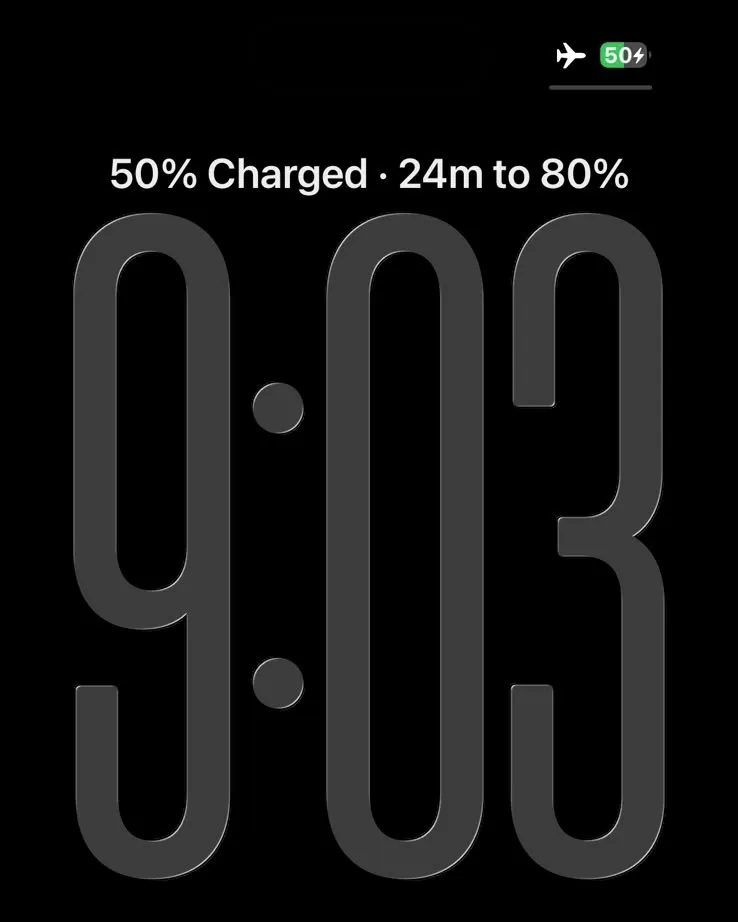
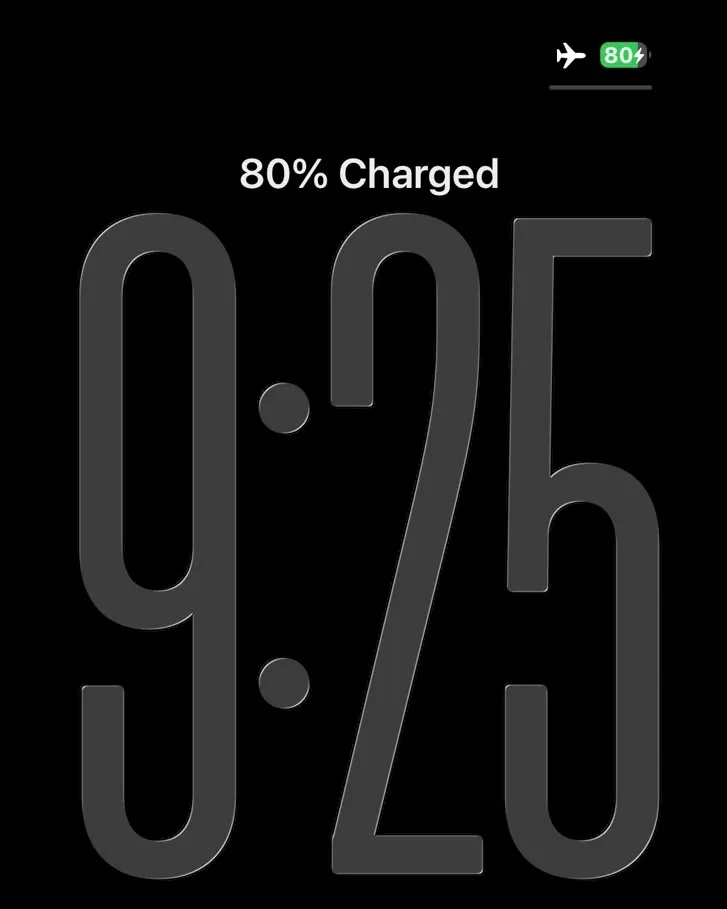
The iPhone took 36 minutes to go from 20% to 80%. But the total time isn’t the most interesting part of the test. Look at what happened to each successive 10%.
Going from 20% to 30% took only four minutes. The next two 10% increases each took five minutes. From 50% to 60%, the time increased to six minutes.
Then it took seven minutes to go from 60% to 70% and nine minutes to move from 70% to 80%. In other words, charging clearly wasn’t occurring at one constant rate.
The iPhone Got Warm, but It Didn’t Keep Getting Hotter
Temperature produced another interesting result. The back of the iPhone measured 37°C at 30%, reached 38°C at 40% and 50%, and then dropped to 37°C at 60%. It remained at 37°C through 70% and 80%.
Remember that the room itself was approximately 35°C. The highest surface reading recorded was therefore only 3°C above ambient temperature at the measurement point.
That doesn’t tell us the internal battery temperature. An infrared thermometer measures the surface, and temperatures inside the phone can differ. Still, it gives us useful real-world information.
The phone didn’t simply become hotter and hotter throughout the fast-charging session. Its measured surface temperature peaked during the earlier part of charging and then declined slightly as charging progressively slowed.
Why Does iPhone Fast Charging Slow Down?
This isn’t accidental. Apple explains that lithium-ion batteries use fast charging to reach a certain level relatively quickly before switching to slower charging. According to Apple, the battery management system gradually reduces the charging current as the battery approaches full charge to help manage heat and battery stress.

That general behavior was visible in the test. The 20% to 30% portion took four minutes. The 70% to 80% portion took nine.
So saying an iPhone uses a “20W charger” doesn’t mean the battery is continuously receiving 20W from beginning to end. The adapter’s rating describes what it can provide. The iPhone controls how much power it actually draws as charging conditions change.
This distinction matters when you ask, does fast charging hurt iPhone battery? The charger may support 20W, but the iPhone decides how much power to draw as charging conditions change.
What Battery Research Says About Fast Charging
There is a reason people worry about fast charging. Lithium-ion research shows that higher charging currents can increase battery stress, particularly when they generate additional heat. Higher temperatures can accelerate chemical reactions that contribute to battery aging.
Another concern is lithium plating, where metallic lithium can form on the anode instead of lithium ions being properly stored within it. The risk increases under unfavorable conditions, particularly high charging rates combined with low temperatures.
But this doesn’t mean using an Apple-supported 20W charger automatically damages an iPhone battery. Battery chemistry, temperature, charging rate, and the phone’s charging management all influence the outcome.
The key point is simple: charging speed, temperature, and battery management all matter.
Heat May Matter More Than the Number Printed on Your Charger
If there’s one thing I’d pay particular attention to when fast charging an iPhone, it’s heat.
Apple warns that using or charging its devices in very hot conditions can permanently reduce battery capacity and recommends avoiding ambient temperatures above 35°C. Battery research also identifies temperature as an important factor in lithium-ion aging.
That’s why I’d be more concerned about charging an already-hot iPhone in direct sunlight, in a hot car, or during a demanding workload than simply seeing “20W” on the charger.
Fast charging can generate additional heat, but wattage alone doesn’t tell the whole story. What matters more is how hot the battery gets and how long it stays hot. If your iPhone gets unusually hot while charging, that’s worth paying attention to.
If the heat continues outside charging sessions, our guide to iPhone overheating and running slow explains the common causes and what you can do about them.
My iPhone 15 Battery Health After 470 Cycles
There’s also a longer-term part of this test. I’ve used this iPhone 15 for roughly 10 months and have predominantly used 20W fast charging since the battery was new.
At the time of writing, iOS reports:
| Battery information | My iPhone 15 |
|---|---|
| Maximum Capacity | 89% |
| Cycle Count | 470 |
| Battery condition | Normal |
| Typical charger | 20W |
| Approximate usage | 10 months |
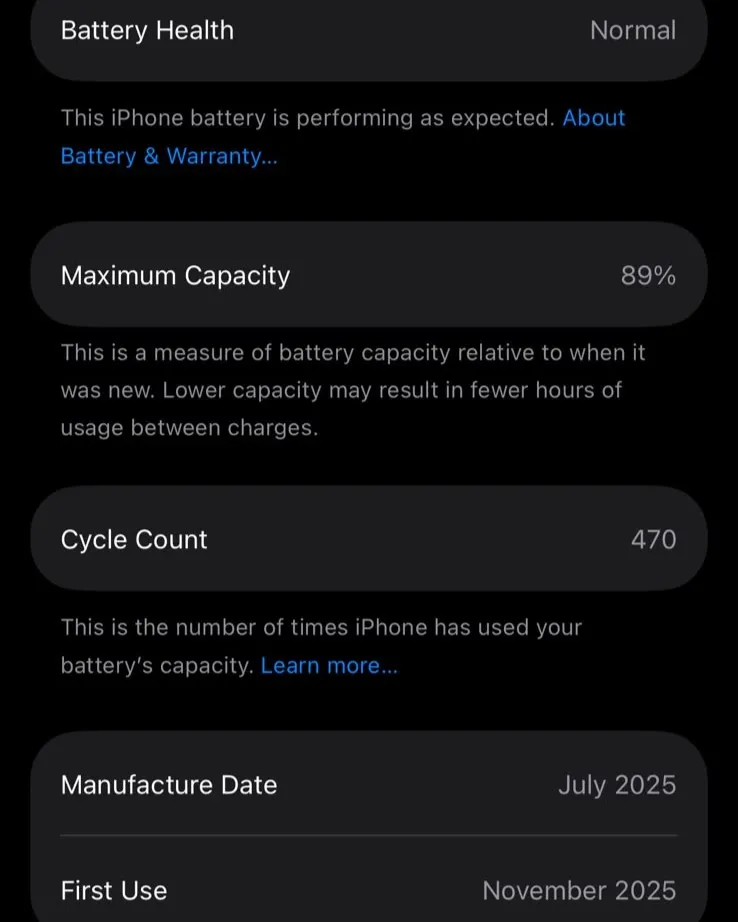
The phone started at 100% maximum capacity and now reports 89%. At first glance, it would be tempting to say, “I used fast charging and lost 11 percentage points of battery health.” But that would be a bad conclusion.
Apple says iPhone 15 batteries are designed to retain 80% of their original capacity after 1,000 complete charge cycles under ideal conditions depending on regular use and charging.
Why 89% Battery Health Can’t Be Blamed on Fast Charging Alone
My charging habits haven’t been particularly conservative. Optimized Battery Charging wasn’t routinely used. The phone was typically charged to around 90% and often dropped to roughly 5% before being plugged in again. It also accumulated 470 cycles in about 10 months, representing substantial real-world use.
Battery aging doesn’t have one cause.
Apple explains that the chemical age of a battery results from a combination of factors, including its temperature history and charging pattern. Lithium-ion batteries also naturally lose capacity as they chemically age.
That means my 89% maximum-capacity reading can’t tell us what percentage of the degradation came from fast charging, deep discharges, temperature exposure, cycle accumulation, calendar aging, or other usage factors.
It certainly doesn’t prove that 20W fast charging caused the 11-percentage-point decline. My result is better viewed as a real-world case study, not a controlled battery-longevity experiment.
If you want to reduce unnecessary battery wear over the long term, our guide on how to improve iPhone battery health covers the charging habits and settings that matter most.
Does a Fast Charger Damage iPhone Battery
Based on battery research, Apple’s charging design, and the test results, the useful question isn’t simply whether 20W charging is “good” or “bad.”
Higher charging currents can increase battery stress, especially under unfavorable conditions. But the iPhone actively manages charging by adjusting power as the battery fills and limiting charging when temperatures aren’t suitable.
Some of that behavior was observed during testing. Charging slowed noticeably at higher battery percentages, while the measured surface temperature stopped rising.
So I wouldn’t avoid Apple’s supported fast charging simply because a 20W charger might damage battery health. I’d pay more attention to heat and overall charging habits.
Is It Better to Slow-Charge an iPhone Overnight?
If your iPhone is going to stay plugged in for several hours, charging speed matters less.
For overnight charging, Apple’s Optimized Battery Charging can reduce the time your iPhone spends fully charged by delaying charging beyond 80% in certain situations and finishing closer to when you normally unplug it.
On iPhone 15 and later, Charge Limit controls can also reduce how high the battery is routinely charged. Both features help address another factor in battery aging: spending long periods at a very high state of charge.
Should You Keep Your iPhone Between 20% and 80%?
You don’t need to obsess over exact percentages every day. Avoiding the extremes can help battery longevity, but your phone is meant to be used. If 80% is enough, Apple’s Charge Limit makes that easy. If you need 100% for a long day, use it.
Battery aging happens over time, not because you occasionally charge to 100% or drop below 20%.
That’s also why the 89% battery health can’t be blamed on fast charging alone. The iPhone was often allowed to drop to around 5% and charged to about 90%, so charging speed wasn’t the only factor involved.
How to Fast-Charge an iPhone Safely
You don’t need an elaborate battery-care routine. Use a reputable charger and cable, and avoid excessive heat while charging. If your iPhone gets unusually hot, let it cool down. Removing the case may also help if it traps heat during charging.
For most users, Optimized Battery Charging is worth keeping enabled. If your iPhone supports Charge Limit and you don’t need a full battery every day, a lower limit is another option. The goal isn’t to keep your battery in perfect conditions. It’s simply to avoid unnecessary stress.
And if your goal is extending runtime rather than protecting long-term capacity, our iPhone Low Power Mode test shows how much difference the feature made in real-world use.
What the Test Actually Tells
After testing 20W charging and looking at longer-term battery data, three things stand out.
First, fast charging isn’t constant. A 10% increase took four minutes early in the test and nine minutes near the end as charging slowed.
Second, the temperature didn’t keep rising. The measured back surface peaked at 38°C at 40–50% and later returned to 37°C, although this was only a surface measurement.
Third, 89% maximum capacity after 470 cycles doesn’t prove fast charging caused the decline. Deep discharges, frequent cycling, charging habits, and temperature can all affect battery aging.
So the 89% figure alone doesn’t show that 20W charging caused an 11% loss in capacity. The data simply can’t establish that.
So, Is Fast Charging Bad for iPhone Battery?
Fast charging can increase lithium-ion battery stress, especially under unfavorable temperatures. But that doesn’t mean Apple’s supported fast charging should be avoided.
The iPhone manages charging dynamically, slowing down as the battery fills and limiting charging when temperatures demand it.
In the iPhone 15 test, 20W charging took the battery from 20% to 80% in 36 minutes. Back-surface temperature peaked at 38°C in a 35°C room and didn’t continue rising toward 80%.
After roughly 10 months and 470 cycles, the phone reports 89% maximum capacity. But charging habits, temperature, cycle count, and normal aging mean that decline can’t be blamed on fast charging alone.
The practical approach is simple: avoid excessive heat, use proper charging equipment, and let the iPhone manage charging. Fast charging is only one part of battery aging.
FAQ
Is fast charging bad for iPhone battery?
Fast charging can increase battery stress, especially when it generates excessive heat. However, iPhones manage charging speed and temperature, rather than charging continuously at maximum power. Under normal conditions, Apple’s supported fast charging isn’t something most users need to avoid for battery-health reasons.
Does fast charger damage iPhone battery?
Using a compatible fast charger doesn’t automatically damage an iPhone battery. Lithium-ion batteries naturally degrade over time, and factors such as temperature, charging rate, cycle count, state of charge, and charging habits can all affect that process.
Does fast charging hurt iPhone battery health over time?
Fast charging can add battery stress under unfavorable conditions, but it isn’t the only factor affecting long-term battery health. Excessive heat matters more, and the iPhone manages charging speed to help control temperature and battery stress.
Is a 20W charger safe for iPhone battery health?
Yes. For compatible iPhones, 20W USB-C charging is within Apple’s supported fast-charging system. The iPhone controls how much power it draws rather than taking the charger’s full rated wattage continuously.
Why does my iPhone charge more slowly after 50% or 80%?
The iPhone gradually reduces charging speed as the battery fills, helping manage heat and battery stress. In the test, charging from 20–30% took four minutes, while 70–80% took nine minutes.
Should I turn on Optimized Battery Charging?
For most users, yes. Apple’s Optimized Battery Charging reduces the time the battery spends fully charged, which helps limit battery aging over time.
Is charging an iPhone to 100% bad?
Occasionally charging to 100% isn’t something to worry about. If battery longevity is your priority and you don’t need a full charge every day, Charge Limit and Optimized Battery Charging can reduce the time your battery spends at a high state of charge.
Is heat worse than fast charging for an iPhone battery?
Heat is a major factor in lithium-ion battery degradation. Fast charging can generate additional heat, so the two aren’t completely separate. Avoiding excessive heat while charging matters more than judging battery stress by charger wattage alone.